Choosing material handling equipment is an important decision for warehouses, manufacturing plants, logistics centers, and engineering facilities. The right equipment can make everyday movement easier, safer, and more organized, while an unsuitable model may create unnecessary handling difficulties. A Hand Pallet Truck is commonly used for moving palletized loads over short distances, but selecting the right model requires more than simply checking its load capacity.
Before purchasing, businesses should consider the type of load, pallet dimensions, operating environment, floor conditions, required lifting height, movement frequency, and available working space. It is also useful to compare construction quality, hydraulic performance, wheel material, fork dimensions, and maintenance requirements. Businesses looking for dependable material handling equipment can review Xpert Industries hand pallet truck solutions and compare them with their operational requirements.
A Practical Guide from Hand Pallet Truck Experts
For businesses evaluating Hand Pallet Truck, the selection process should begin with the actual material-handling application rather than the equipment's appearance or price alone. Different workplaces require different combinations of capacity, maneuverability, fork dimensions, lifting height, and wheel configuration.
If your facility handles standard pallets and routine internal transportation, a conventional model may be sufficient. Heavy manufacturing environments may require a reinforced model, while facilities handling cylindrical materials may benefit from reel-handling designs. Similarly, operations involving weighing, packing, or workstation loading may require specialized configurations.
When the requirement is application-specific, businesses can discuss their equipment requirement with Xpert Industries and provide details such as load weight, pallet dimensions, floor conditions, and expected operating frequency.
How to Choose the Right Hand Pallet Truck for Your Application
The best selection process is based on measurable operating requirements. Instead of choosing equipment solely because it has a higher capacity or more features, evaluate how it will actually be used in your facility.
-
Determine the Required Load Capacity
Load capacity should be the first technical specification to evaluate. The equipment must safely support the maximum expected load, including the pallet and its contents.
For example, standard models may be suitable for routine loads, whereas heavy-duty versions are designed for substantially heavier palletized materials. Xpert Industries' published specifications list standard capacities of 2,000 kg, 2,500 kg, and 3,000 kg, while its heavy-duty range includes capacities up to 5,000 kg.
Avoid selecting a model based only on the average load. Consider the heaviest load that will regularly be handled and maintain an appropriate operating margin.
-
Check Fork Length and Width
Fork dimensions must match the pallets and loads used in your facility.
Standard fork lengths around 1,150 mm are commonly used for conventional pallet handling, but customized requirements may call for different dimensions. Fork width is equally important because incorrect positioning can affect load stability and maneuverability.
Before ordering, measure:
- Pallet length and entry openings
- Pallet width
- Load dimensions
- Required fork spacing
- Available aisle width
A correct dimensional match can make loading and positioning considerably easier.
-
Consider the Required Lift Height
Most conventional pallet trucks are designed primarily for lifting a pallet clear of the floor so that it can be transported. However, some applications require additional elevation.
A high-lift model may be appropriate when materials need to be raised to a more convenient working height for packing, assembly, or workstation operations. Xpert Industries lists a high-lift model with a maximum lift height of up to 800 mm.
Therefore, determine whether the equipment will only transport pallets or whether it must also support elevated handling tasks.
-
Select the Right Wheel Material
Wheel selection affects maneuverability, noise, floor protection, and performance.
Common options include:
- Nylon wheels: Suitable for many industrial surfaces and applications requiring durable rolling performance.
- PU wheels: Useful where smoother movement and reduced floor impact are important.
- Rubber wheels: <a href="https://www.xpertindustries.com/contact-us.php">Can provide</a> useful cushioning and quieter movement on suitable surfaces.
The best option depends on your floor type, operating environment, load characteristics, and movement frequency.
-
Evaluate the Hydraulic System
The hydraulic system directly affects lifting and lowering performance. A reliable pump should provide controlled lifting and smooth lowering without requiring excessive operator effort.
Look for a design that provides:
- Consistent lifting action
- Controlled lowering
- Stable load positioning
- Durable hydraulic components
- Straightforward maintenance
A well-designed hydraulic system is particularly important when equipment is used repeatedly throughout a working shift.
-
Match the Equipment to the Application
Not every pallet truck is designed for the same type of material.
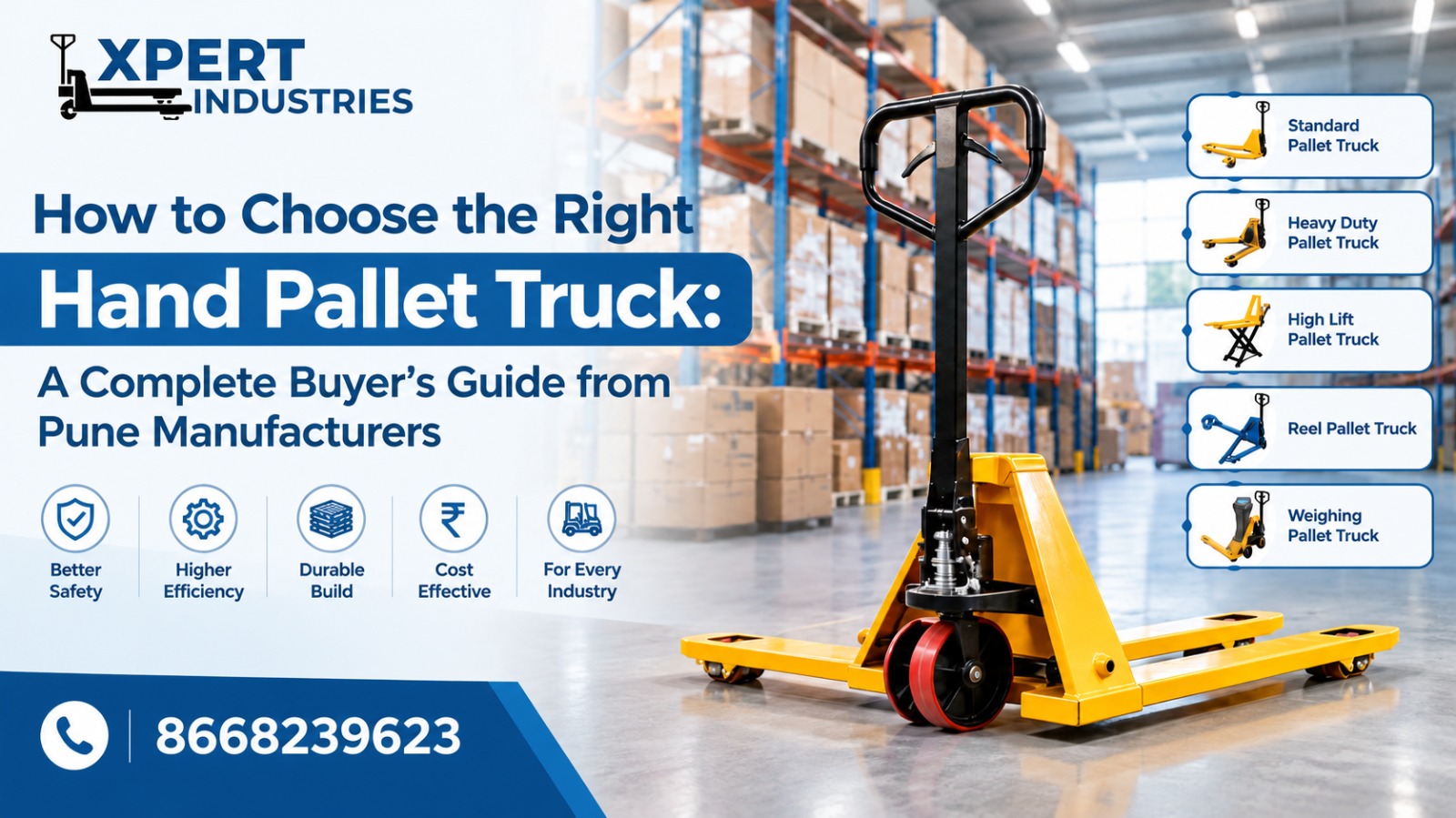
Heavy-Duty Models: Designed for demanding applications involving heavier palletized loads. Reinforced construction and higher capacity can make them appropriate for industrial manufacturing, warehouses, and logistics operations.
Reel Pallet Trucks: Designed for cylindrical materials such as paper reels, cable drums, textile rolls, and similar products. Specialized fork designs help support round loads during movement.
High-Lift Models: Useful where pallet movement and elevated working operations are combined. These can support packing, assembly, and workstation activities.
Weight Scale Models: Combine pallet transportation with integrated weighing. This can be useful in warehouses, manufacturing plants, distribution facilities, and shipping operations where weighing and movement are both part of the workflow. Xpert Industries lists display accuracy options of ±0.5 kg / ±1 kg for its weight-scale model.
-
Think About Operator Ergonomics
Material handling equipment is often operated repeatedly, so the handle design, steering response, and control arrangement should be considered carefully.
An ergonomic handle can make lifting, lowering, and steering easier. Smooth steering is particularly useful when operators work in narrow aisles or areas with frequent pallet movement.
Businesses should also consider the physical demands placed on operators during repetitive handling tasks. Equipment that is easy to maneuver can help make routine material movement more manageable.
-
Consider Maintenance Requirements
Maintenance requirements should be considered before purchase, not after installation.
Check whether the equipment uses durable components and whether commonly serviced parts can be inspected easily. Hydraulic components, wheels, bearings, forks, and structural areas should be included in routine inspection programs.
A low-maintenance design can also help reduce interruptions when the equipment is used frequently.
-
Consider Your Working Environment
The workplace itself can influence equipment selection.
For warehouses and logistics centers, aisle width and floor condition are important. Manufacturing plants may require equipment capable of handling frequent movement between production areas. Packaging facilities may prioritize maneuverability around workstations, while cold-storage applications may require suitable wheels and materials for lower-temperature conditions.
Other factors to evaluate include:
- Indoor or outdoor operation
- Floor smoothness
- Temperature
- Load frequency
- Available maneuvering space
- Cleaning requirements
- Corrosive or demanding environments
-
Compare Suppliers Carefully
Choosing between Hand Pallet Truck should involve more than comparing quoted prices. Look at the specifications offered, customization possibilities, technical support, product documentation, delivery arrangements, and after-sales assistance.
Similarly, businesses comparing Hand Pallet Truck should verify whether the supplier can provide the required specifications, packaging, documentation, and shipping support for their intended destination.
For local industrial buyers, working with an established supplier can also make it easier to discuss application-specific requirements before placing an order.
What Should You Ask Before Buying?
Before finalizing your purchase, prepare a short checklist for your equipment supplier:
- What is the maximum load weight?
- What pallet dimensions will be handled?
- What fork length and width are required?
- What lift height is necessary?
- Which wheel material suits the floor?
- How frequently will the equipment be operated?
- Is a standard or specialized model required?
- What maintenance is recommended?
- Are customized specifications available?
- What technical support is provided after purchase?
Providing these details allows the supplier to understand the application and recommend a suitable configuration rather than simply offering a generic model.
Why Application-Based Selection Matters
A pallet truck is part of a larger material-handling workflow. Its performance depends not only on its construction but also on whether its specifications match the environment in which it operates.
For example, a warehouse moving standard pallets may prioritize maneuverability and wheel selection, while a manufacturing facility handling heavier components may focus more strongly on load capacity and structural strength. A packaging operation may benefit from high-lift functionality, whereas a shipping facility may value integrated weighing.
This is why businesses should evaluate the complete workflow before purchasing. The objective should be to select equipment that fits the load, pallet, workplace, operator, and movement pattern.
Conclusion
Selecting the right pallet-handling equipment starts with understanding your actual operating requirements. Load capacity, fork dimensions, lifting height, wheel material, hydraulic performance, ergonomics, maintenance, and working conditions should all be considered before making a purchase.
Whether you are comparing Hand Pallet Truck, suppliers, dealers, or manufacturers, focus on technical suitability and application requirements rather than choosing solely on price. A properly matched model can support smoother internal material movement and help integrate pallet handling more effectively into warehouse, manufacturing, logistics, and engineering operations.
For businesses that need help evaluating available configurations, explore Xpert Industries' hand pallet truck solutions or contact us directly with your load capacity, pallet dimensions, and application details so the appropriate equipment specifications can be discussed.
FAQs
Choose a Hand Pallet Truck based on the maximum load weight, pallet dimensions, required lift height, operating environment, floor conditions, movement frequency, available working space, wheel material, fork dimensions, hydraulic performance, and maintenance requirements.
The load capacity should safely support the maximum expected load, including the pallet and its contents. You should consider the heaviest load regularly handled rather than selecting a model based only on the average load.
Fork dimensions should match your pallet and load dimensions. Before purchasing, check the pallet length and entry openings, pallet width, load dimensions, required fork spacing, and available aisle width.
The required lift height depends on how the equipment will be used. Businesses should consider whether the pallet truck is intended mainly for transportation or whether lifting for packing, assembly, workstation activities, or other elevated operations is required.
Wheel selection should take the operating floor and workplace conditions into account. Floor conditions, maneuverability, operating environment, and movement frequency should be evaluated before choosing the appropriate wheel configuration.
Heavy-duty models are designed for demanding applications involving heavier palletized loads. Their reinforced construction and higher capacity can make them suitable for industrial manufacturing, warehouses, and logistics operations.
A Reel Pallet Truck is suitable when handling cylindrical materials such as paper reels, cable drums, textile rolls, and similar products. Its specialized fork design helps support round loads during movement.
The choice depends on your application. Standard models may be suitable for routine pallet transportation, while heavy-duty, reel, high-lift, or weight-scale models may be more appropriate for specific material-handling requirements.
Check the durability and serviceability of components such as hydraulic parts, wheels, bearings, forks, and structural areas. Maintenance requirements should be considered before purchase, particularly when the equipment will be used frequently.
Provide details such as the maximum load weight, pallet dimensions, required fork length and width, required lift height, suitable wheel material, operating frequency, and whether you need a standard or specialized model. This helps the supplier recommend a suitable configuration.