Choosing Your Next Stacker: What Manual Hand Stacker, Want Every Buyer to Know
Every warehouse manager in Pune eventually faces the same question: is it smarter to invest in a manual stacker, or to pay extra for an electric one? The answer is rarely as simple as "electric is modern, so it must be better." Xpert Industries, one of the trusted Manual Hand Stacker, has spent more than 15 years supplying material handling equipment to warehouses, factories, workshops and distribution centres, and one lesson keeps coming up again and again. The best stacker is not the one with the longest feature list. It is the one that fits your daily workload, your budget and your team.
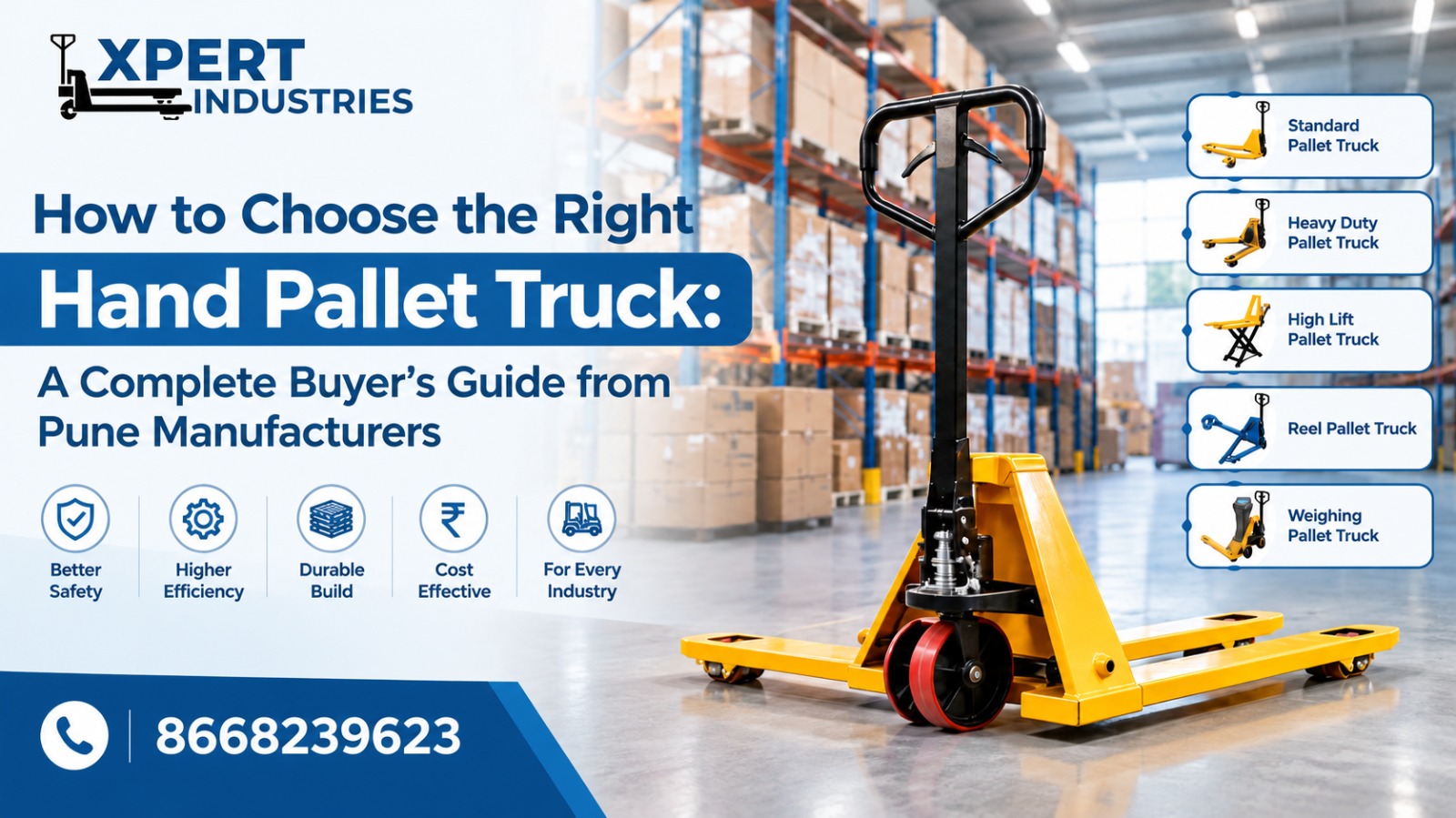
In this guide, we will walk you through how each type of stacker works, where each one performs best, and what you should check before placing an order. If you are still deciding whether you need a stacker at all, it may help to first look at a hand pallet truck, which moves loads along the floor but cannot lift them onto racks. A stacker steps in the moment your goods need to go up. Speaking with experienced Manual Hand Stacker early in your planning can also save you from buying a machine that is either too basic for your work or far more than you actually need.
Before we begin, here is a small suggestion: keep three numbers in mind as you read. These are the heaviest pallet you lift, the highest rack level you use, and the number of pallets you move in a single shift. If you already know these figures, you can share your requirements with our team and we will help you narrow down the right model while you go through the rest of this blog.
What Is a Manual Hand Stacker and How Does It Work?
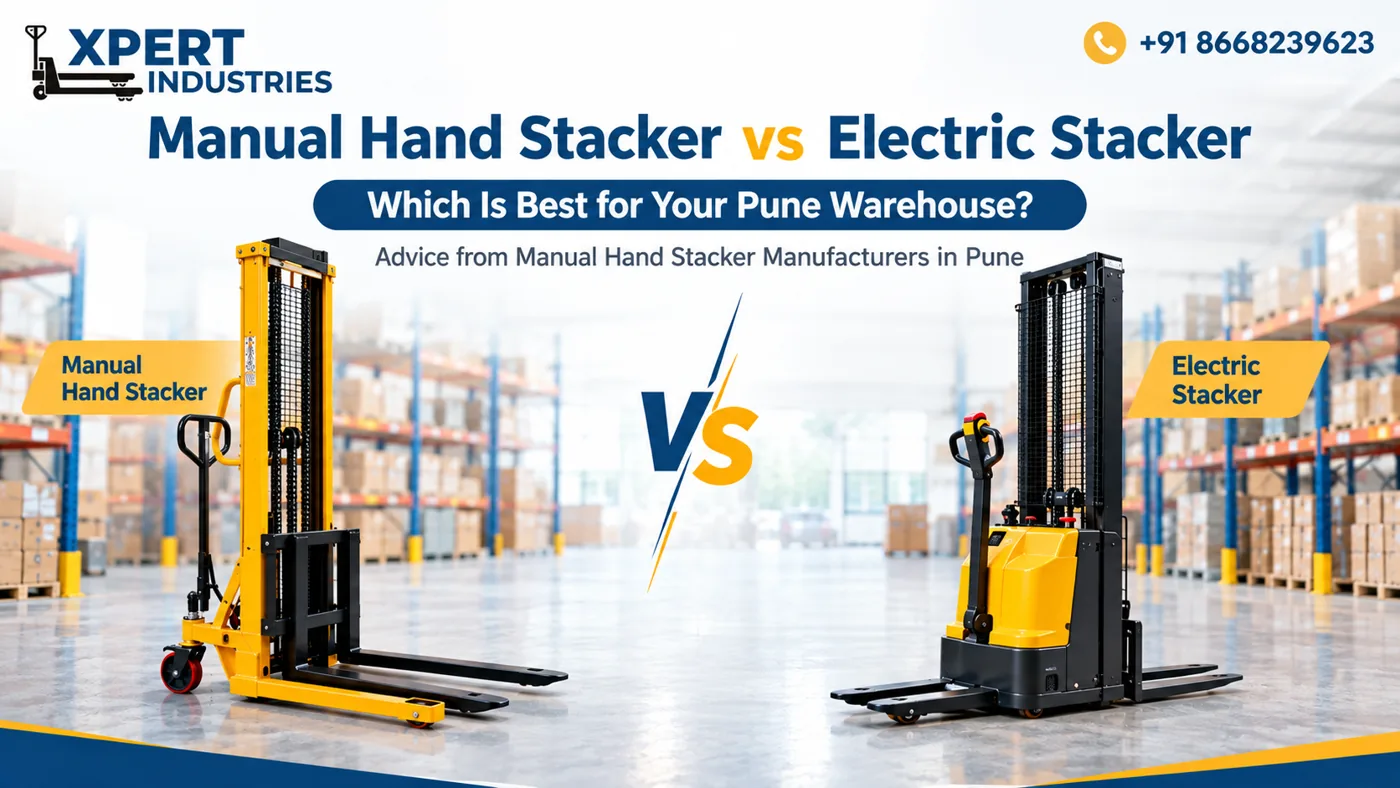
A manual hand stacker is a hydraulic lifting machine operated entirely by human effort. The operator slides the forks under a pallet and pumps the hydraulic handle. The pressure builds inside the hydraulic cylinder and raises the mast and forks to the height you need. The load is then pushed to its destination and lowered in a controlled manner. Because there is no motor or battery involved, the machine is simple, quiet and easy to maintain, and it keeps working without depending on a power supply.
Modern manual stackers are far from basic. A well-made model comes with a reinforced hydraulic system, precision mast guidance, smooth steering wheels, overload protection and controlled lowering. These details matter more than most buyers realise, because they decide how safe and comfortable the machine feels after hundreds of lifting cycles. When you compare Manual Hand Stacker Suppliers in Pune, it is worth asking how each model has been tested under real warehouse conditions and not only on a showroom floor.
What Is an Electric Stacker?
An electric stacker uses a battery-powered motor to lift the load, and in many cases to drive the machine as well. The operator presses a button instead of pumping a handle, which removes most of the physical effort from the job. This makes electric models attractive for warehouses that lift heavy pallets to higher racks many times a day.
The trade-off is cost and upkeep. Electric stackers usually have a higher purchase price, they need a regular charging routine, and the battery and electrical parts need periodic servicing. If your team is not ready for that routine, the machine can sit idle at exactly the moment you need it. There is also a middle option to consider: a manual and semi-electric stacker, where the operator pushes and pulls the machine by hand while a battery powers only the hydraulic lift. It can be a sensible compromise if you want less lifting effort without the full cost of an electric model.
Manual vs Electric Stacker: The Key Differences
The table below gives a quick side-by-side view of the two types, and the next sections explain how to read it.
| Factor | Manual Hand Stacker | Electric Stacker |
|---|---|---|
| Purchase cost | Lower | Higher |
| Power source | Hydraulic handle, human effort | Battery and motor |
| Maintenance | Simple and easy | Battery and electrical servicing |
| Operator effort | Moderate, more physical | Low, push-button lift |
| Running needs | No charging required | Regular charging routine |
| Best suited for | Medium-duty, occasional to moderate lifting | Frequent, heavy lifting to higher racks |
When a Manual Hand Stacker Is the Better Choice
A manual hand stacker is usually the smarter buy when your lifting is occasional or moderate. Small and medium warehouses, workshops, retail stockrooms and factories that handle a limited number of pallets each day often find that a manual model does everything they need. Since it does not depend on electricity, it is also a practical choice where charging points are not convenient.
Budget is another strong reason. Manual stackers are less expensive than electric ones and their maintenance is easy, so the cost stays low over the years. If you are speaking with Manual Hand Stacker Dealers in Pune about a first stacker for a growing business, starting with a manual model lets you settle your workflow first and upgrade later, once your volumes justify it.
When an Electric Stacker Makes More Sense
Electric stackers earn their price in busy, multi-shift operations. If your operators lift heavy pallets to upper racks throughout the day, the hand effort of a manual machine adds up as fatigue, and fatigue is a safety risk. A push-button lift keeps the pace steady and reduces strain over a long shift.
They also suit warehouses with tall racking, large volumes and tight dispatch schedules, where a few seconds saved per pallet turns into hours saved every week. If your dispatch schedule is tight because of export orders, it is a good idea to discuss your daily pallet count with Manual Hand Stacker before you decide, since an honest look at your volume will tell you whether a manual model can keep up.
Key Specifications to Check Before You Buy
Whichever type you lean towards, go through the specifications carefully. For manual hand stackers, the typical options include the following:
- Load capacity: 500 kg, 1000 kg or 1500 kg
- Lift height: 1600 mm, 2500 mm or 3000 mm
- Fork length: 900 mm or 1150 mm
- Overall fork width: 550 mm or 680 mm
- Minimum fork height: 85 mm
- Wheel material: Nylon or PU
Match the load capacity to your heaviest pallet with a comfortable margin, and confirm that the lift height clears your top rack level. Fork length and width should suit your pallet size. A wide fork model is designed for oversized pallets, while a counter balance model with adjustable straddle legs helps when you handle pallets of different sizes. It is also wise to check the safety features, such as double security locking, controlled lowering and overload protection, because these protect both the operator and the goods.
Practical Tips for Pune Warehouses
Start with your floor. Uneven surfaces and repetitive lifting cycles put constant stress on the wheels, steering and hydraulics, so the machine should be built for that kind of use. Next, ask how the stacker has been evaluated. At Xpert Industries, our stackers are tested in real warehouse conditions over 90 to 180 operational days, and the checks cover hydraulic lifting performance, load stability, steering efficiency, structural durability and maintenance requirements.
Think about your operators as well. Ergonomic handles, intuitive controls and easy steering reduce fatigue and help your team work with better control. Finally, look at the maker behind the machine. We are ISO 9001 certified and build our stackers with heavy-duty hydraulic systems, precision lifting mechanisms and strong steel frames, so you can expect a long service life with low maintenance.
Conclusion: Which Stacker Is Best for Your Warehouse?
There is no single winner in the manual versus electric debate. A manual hand stacker gives you dependable lifting, easy upkeep and a lower purchase cost, which suits medium-duty work very well. An electric stacker gives you speed and less effort when volumes are high and racks are tall. The right choice depends on your load, lift height, shift pattern and budget. If you are still unsure, talking to experienced Manual Hand Stacker and makers can help you compare your options using real numbers. Xpert Industries would be glad to guide you, so contact our team today to discuss your needs and find a stacker that keeps your Pune warehouse safe, productive and cost effective.
FAQs
A Manual Hand Stacker uses human effort and a hydraulic handle for lifting, while an Electric Stacker uses a battery-powered motor to lift the load. Manual models generally have a lower purchase cost and simpler maintenance, while electric models reduce operator effort and are better suited to frequent lifting.
A Manual Hand Stacker can be a practical choice for small warehouses with occasional or moderate lifting requirements. It has a lower purchase cost, does not require charging, and is relatively simple to maintain.
An Electric Stacker may be more suitable for busy warehouses with frequent pallet movement, heavy loads, tall racks, or multi-shift operations where reducing operator effort is important.
Manual Hand Stacker capacity options discussed in this guide include 500 kg, 1000 kg, and 1500 kg. The appropriate capacity should be selected according to the heaviest pallet regularly handled.
The lift height should match the highest rack or working level where the pallet needs to be positioned. The options discussed in this guide include 1600 mm, 2500 mm, and 3000 mm.
No. Manual Hand Stackers use a hydraulic handle and human effort for lifting and do not require a battery or electrical power supply for their lifting operation.
Check the fork length and overall fork width against the pallet dimensions and load requirements. The options discussed in this guide include fork lengths of 900 mm or 1150 mm and overall fork widths of 550 mm or 680 mm.
Manual Hand Stackers generally have simpler maintenance requirements because they do not use a battery-powered motor or electrical lifting system. Electric models require battery charging and periodic servicing of their electrical components.
A Manual Hand Stacker generally has a lower initial purchase cost and simpler maintenance. An Electric Stacker costs more but can provide greater operator convenience for frequent and demanding lifting operations.
Consider your load weight, required lift height, number of pallets moved per shift, operating frequency, warehouse conditions, operator effort, charging requirements, and budget before selecting the appropriate stacker.